
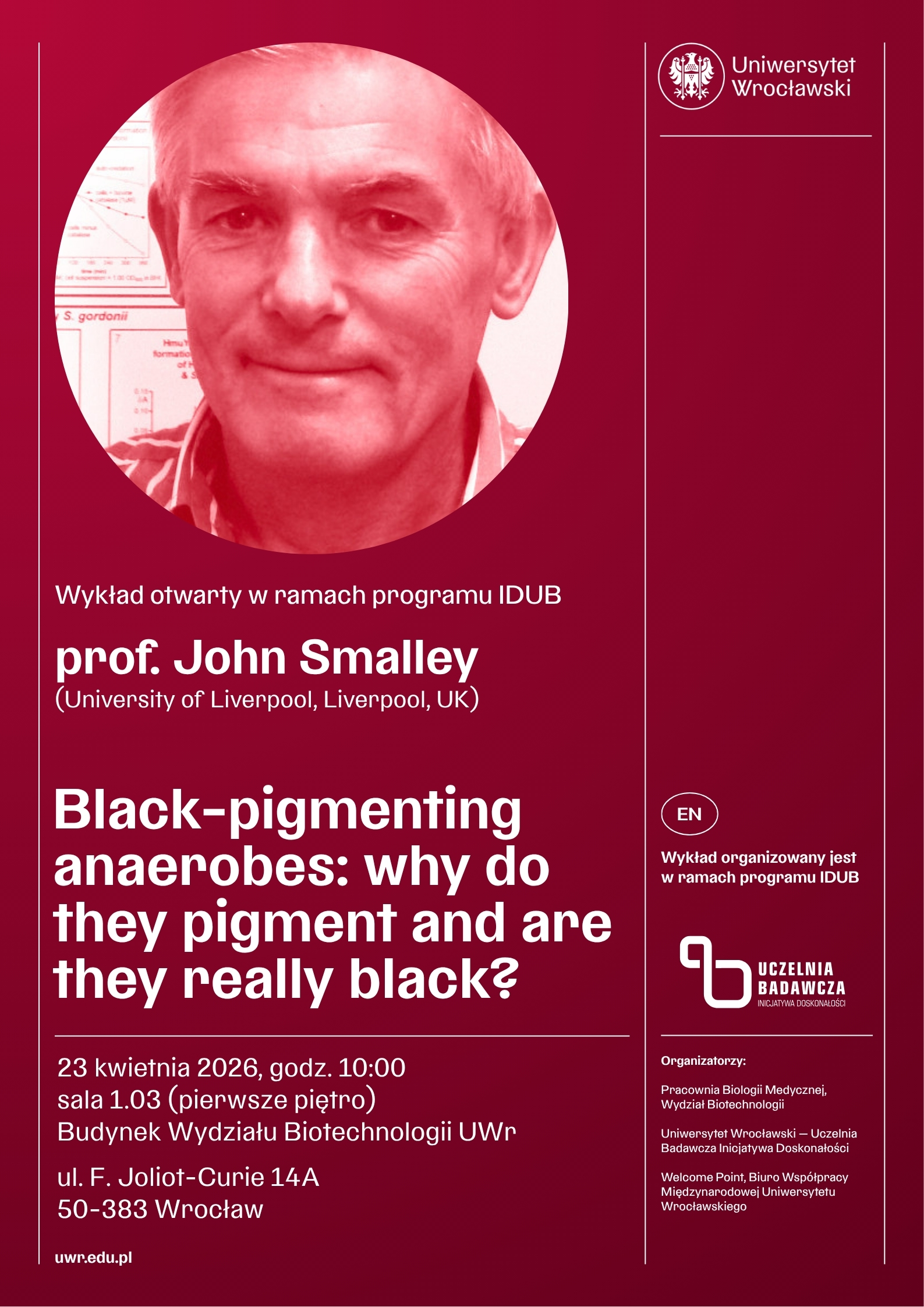
23.04.2026., 10.00 am., room 1.03
As part of the “Excellence Initiative – Research University” program, we invite you to a seminar by Professor John Smalley from the University of Liverpool, Liverpool, UK:
“Black-pigmenting anaerobes: why do they pigment and are they really black?“
Abstract: Heme is essential for the growth of black-pigmenting species Porphyromonas and Prevotella. These organisms are major etiological agents in the initiation and progression of periodontal disease. When grown on blood agar, they accumulate a black pigment which is composed of forms of iron (III) protoporphyrin IX. Heme is critical to the physiology and virulence of Porphyromonas gingivalis. Environmental heme excess promotes its pathogenicity and survival. The main environmental source of heme is hemoglobin, derived from tissue inflammation and bleeding during periodontal disease episodes. In this seminar, I will describe my and others’ biochemical work, which has led to the elucidation of the mechanisms of heme pigment formation.
Bio:
Professor John Smalley is a distinguished scientist with numerous notable achievements.
Scientific achievements:
- Extensive research on bacterial heme-containing pigments of black-pigmenting anaerobes, on heme control in physiology and pathogenicity, identification of bacterial outer-membrane heme-binding proteins; Establishment of the steps involving proteases in the breakdown of hemoglobin and serum heme-albumin in the formation of the pigments;
- Demonstration of syntrophic mechanisms involving proteases and HmuY proteins to extract heme from haemoglobin and the potentiating influence of non-enzymic glycation of hemoglobin on P. gingivalis virulence;
- Discovery of the role of anaerobic oral bacteria in lung and other infections, including those in cystic fibrosis and diabetes;
- Over 50 publications in prestigious international journals.
Teaching achievements:
- Course co-director, University of Liverpool Dental School, undergraduate Oral Science and Medicine course, with responsibility of development of Problem-Based Learning
- Developed and directed the endodontic microbiology course as part of the clinical post-graduate Liverpool Dental School Doctorate of Dental Science (Endodontics)
- External examiner for several PhD students, both nationally and internationally
- Referee for various national and international microbiological and biochemical journals
- Regional Editor for the journal Molecular Oral Microbiology
- Committee Member of the British Society for Dental Research, Oral Microbiology and Immunology
Other achievements:
- Visiting Professor in the Faculty of Biotechnology, University of Wrocław, Wrocław
- Visiting Professor in the Faculty of Biochemistry, Biophysics and Biotechnology, Jagiellonian University, Kraków